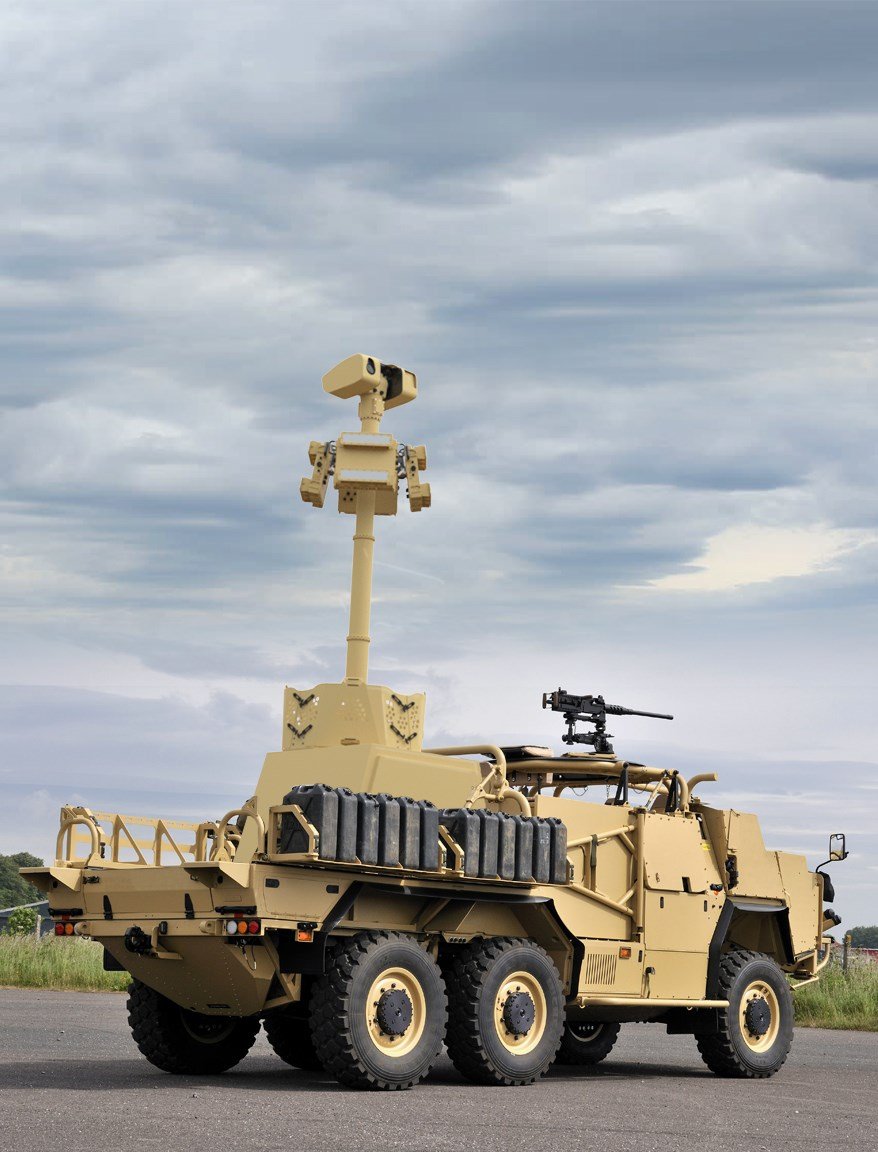
Blighter Surveillance has announced significant enhancements to the stealth capabilities of its electronic-scanning radar portfolio, specifically targeting the burgeoning market for manned and unmanned mobile surveillance platforms. The upgrades are a direct response to the escalating sophistication of electronic counter-countermeasures (ECCM), which has intensified the demand for Low-Probability-of-Intercept (LPI) systems. In modern mobile surveillance, the ability to observe without being detected is paramount for ensuring information superiority and data security.
The company’s radar series, including the B400 model, leverages advanced LPI waveforms that render the signal elusive to enemy receivers and resistant to jamming, all while maintaining high-fidelity detection of personnel, vehicles, and low-altitude aerial threats. Blighter’s CTO, Mark Radford, attributes this inherent stealth to foundational design principles. The company’s pioneering use of a solid-state, non-rotating architecture with dual-antenna FMCW technology in the Ku-band spectrum has created a naturally covert and robust system.
Ongoing refinements are pushing these boundaries further. New fast-scanning modes with sub-second updates distribute even less energy directionally. Furthermore, integration with the BlighterNexus ‘Scan-Manager’ allows the radar to function in a Multi-Function Radar (MFR) mode, introducing greater randomness to its already low-power transmissions.
This low-power design—operating at just 4 Watts—minimizes the radar’s electromagnetic and acoustic signatures, creating a smaller safety envelope that simplifies integration onto hybrid or electric autonomous vehicles. This capability is already being proven in the field. In 2025, Blighter radars were deployed on custom surveillance vehicles for European border monitoring, integrated into Allen-Vanguard’s counter-drone system, and selected by a Southeast Asian military for mobile border patrols. As Radford concludes, the combination of e-scan, FMCW, and complex Doppler chirp waveforms makes this radar exceptionally difficult to detect, positioning it as a leading choice for modernisation programmes and next-generation patrol vehicles.