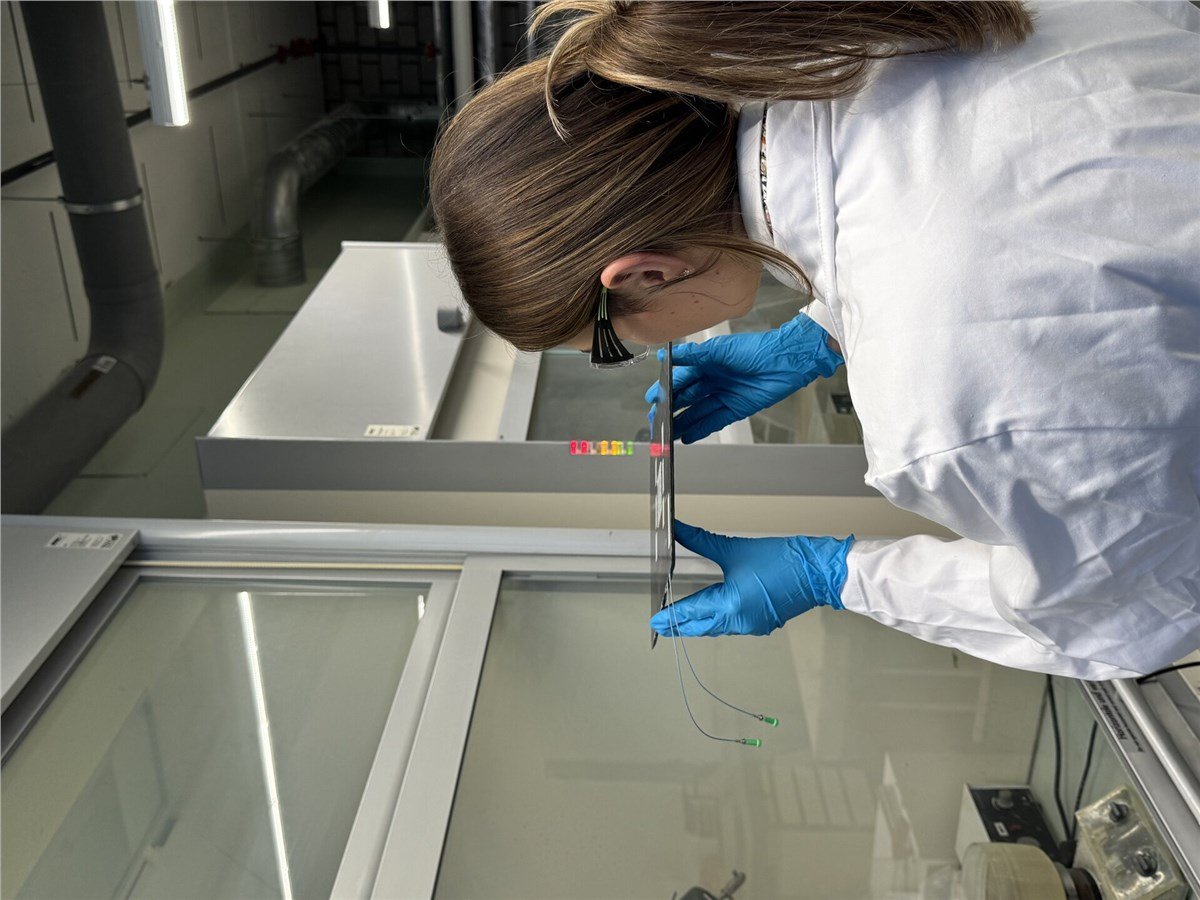
Spacecraft of the future may repair themselves mid-mission, thanks to a groundbreaking European collaboration developing “healable” composite materials for space applications.
Swiss companies CompPair and CSEM, together with Belgian firm Com&Sens, have partnered with the European Space Agency (ESA) on Project Cassandra—an initiative to adapt self-healing carbon fiber technology for space transportation. The name loosely abbreviates “Composite Autonomous SenSing AnD RepAir,” capturing the project’s core innovation: materials that can detect and fix their own damage.
How Self-Healing Composites Work
The technology builds on CompPair’s existing “HealTech” material, a composite where traditional carbon fiber reinforcement is enhanced with a specialized healing agent within the polymer matrix. When damage occurs—whether from micrometeoroid impacts, thermal stress, or structural fatigue—the material doesn’t simply accept its fate.
Here’s where the innovation becomes remarkable: an integrated network of fiber-optic sensors continuously monitors the structure’s health. When these sensors detect cracks or damage, they trigger heating elements embedded through 3D-printed aluminum grids. Raising the temperature to 100-140°C activates the healing agent, which reflows to fill cracks and restore structural integrity—effectively allowing the spacecraft to heal itself.
Testing and Space Applications
The team has already tested samples ranging from small coupons to 40×40 cm panels, evaluating damage detection, uniform heating capabilities, and healing efficiency. Crucially, they’ve also conducted thermal shock tests simulating the extreme conditions of cryogenic fuel tanks—a key application for future reusable spacecraft.
The implications for space exploration are profound. Traditional composite repairs are expensive, time-consuming, and often compromise structural integrity. Self-healing materials could eliminate this problem entirely, enabling longer missions and safer reusable vehicles.
Benefits for European Space Innovation
“This technology could have enormous benefits for space transportation,” says ESA’s Bernard Decotignie. “It will help develop reusable space infrastructure and reduce mission costs.”
CompPair’s Robin Trigueira sees even broader potential: “We’re closing the gap between science fiction and reality. This unlocks unprecedented advancement for composite material health monitoring.”
As space agencies worldwide pursue sustainable exploration, self-healing composites represent a paradigm shift—not just repairing damage, but fundamentally reimagining how spacecraft survive the harsh realities of space. The next phase will scale the technology to full-size cryogenic tanks, bringing autonomous, self-repairing spacecraft closer to reality.