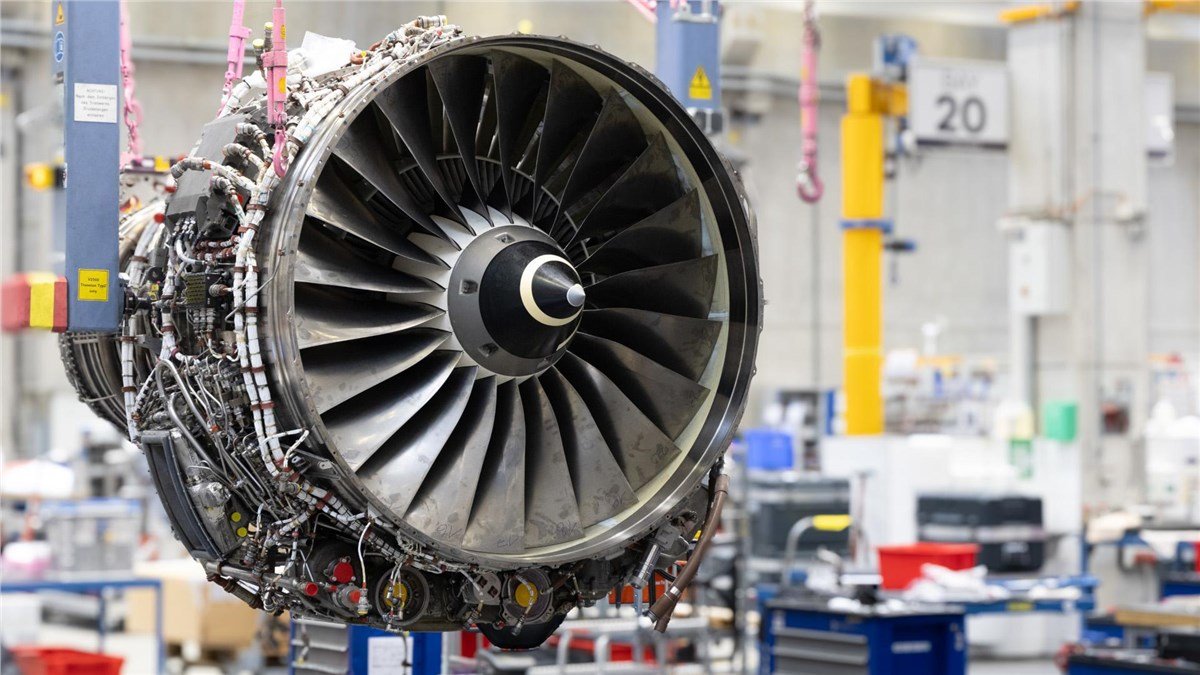
Lufthansa Technik, in a strategic expansion of its long-standing partnership with component manufacturer Chromalloy, is now offering airlines a new, cost-effective option for maintaining their V2500 SelectOne engines. The collaboration has yielded the development of six different turbine blades for this specific engine model, which powers the Airbus A320ceo family of aircraft.
Two of these components—a second-stage High-Pressure Turbine (HPT) blade and a seventh-stage High-Pressure Compressor (HPC) blade—have already received certification from the Federal Aviation Administration (FAA). These parts, known as Parts Manufacturer Approval (PMA) components, provide a financially attractive alternative to original equipment manufacturer (OEM) parts. Crucially, PMA parts are fully approved by aviation authorities and are equivalent to OEM parts in their form, fit, function, and adherence to stringent safety standards.
The newly certified blades are not just theoretical; they have been in operational service for several months. Lufthansa Technik has already installed them in a double-digit number of engines across various airlines within the Lufthansa Group. These engines have collectively accumulated approximately 1,800 flight hours and over 1,100 flight cycles, with initial performance results meeting all expectations.
Dr. Alexander Feuersaenger, Senior Vice President of Fleet Management for the Lufthansa Group, confirmed the positive start, stating that the decision to adopt these PMA components for their A321ceo fleet was based on a technically sound and economically attractive proposition that maintains the highest quality and safety.
This development gives airlines a significant choice. When selecting Lufthansa Technik for V2500 SelectOne overhauls, customers can now opt to use either traditional OEM parts or the new, more cost-efficient PMA components, with the assurance of identical performance and safety.
Chromalloy CEO Chris Celtruda emphasized the importance of the extended collaboration with Lufthansa Technik, now set to continue through 2035. He noted that the partnership reflects a shared commitment to excellence and value-driven solutions for the global aviation market. This project builds on the companies’ previous successful collaborations on other engine types, marking a new milestone in their long-term relationship.